

Bantam Chickens: In-depth Guide
Bantam chickens are small chickens, usually about a quarter of the weight of standard breeds and under 2 pounds. Some are miniature versions of full-size breeds, and some, called true bantams, only come in small size. They fly well, go broody often, and fit in a small backyard. Here’s what to know before you add some to your flock.
Bantam vs. Standard Chickens at a Glance
| Bantam | Standard | |
|---|---|---|
| Weight | Usually under 2 pounds | About four times heavier |
| Eggs | About half the size of a medium egg | Medium to large |
| Eggs per year | 50 to 200, depending on breed | Varies by breed |
| Coop space | About half; 2 bantams per standard hen | Full size |
| Roost space | 4 to 6 inches per bird | More per bird |
| Time to maturity | About 20 weeks | About 20 weeks |

Background of Bantam Chickens
The name bantam is from the city of Bantam in Indonesia where sailors picked up native small chickens for their journey. In time, any small breed of poultry became known as bantam.
Bantam chickens are not really a breed of chicken. The term bantam refers to the size of the chicken. There are actually many different breeds of bantam chickens and they come in a wide range of colors and patterns.
Some bantam chicken breeds have larger lookalikes, but that doesn’t mean they share the same bloodlines. Some are the miniatures of larger breeds and some have no matching larger twin. The Sebright, for example, only comes as a bantam.
Popular Bantam Breeds
True bantams have no full-size version. Common examples include the Sebright, Serama, Japanese, Rosecomb, Dutch, Booted, Nankin, and Pekin bantams.
Miniature bantams are small versions of full-size breeds, like the Cochin, Orpington, Brahma, Plymouth Rock (including the Barred Rock), and Polish. They look like their larger cousins, but their tails and wings are often bigger for their size.
Common Characteristics of Bantam Chickens
Even though there are many different breeds of bantam chickens, they share a number of similarities.
Purpose
Because of their colorful and fancy feather patterns, these chickens are often kept for their looks. They are still practical to have around. People keep them for their eggs, but they can be eaten, as well, like any old chicken. They will produce much less meat, but some say it is just the right size for 2 people to enjoy a meal.
Silkies have black skin and bones, so a dressed Silkie looks very different from other chickens. Not everyone at the table wants to eat one.
Appearance
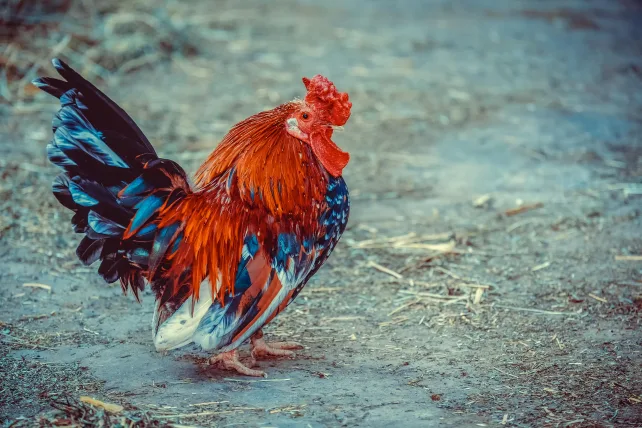
As just mentioned, bantams are beautiful, ornamental birds. They are diverse as their larger cousins. Bantam breeds range in varieties from having a single comb or rose comb, feathered legs or clean legs, to a wide range of color combinations and patterns.
Despite their names, some miniature bantams, meaning they have larger counterparts, do look a bit different than their larger namesakes as the proportions are not miniaturized to scale, such as the Orpington, Polish, Brahma, Plymouth Rock. The bantam breeds tend to have larger tail and wing feathers in regards to their bodies.
True bantams are one of a kind bantam breeds that do not have any larger equivalent. They are not miniatures of full-size chickens. They are as unique as they are beautiful. Some examples of these are Bearded d’Anvers, Booted bantam, Dutch bantam, Nankin, Rosecomb, Sebright, Serama.

Size
Where standard chicken breeds are measured in pounds, bantams are measured in ounces. Due to their small size, typically bantams weigh less than 2 lbs and about a quarter of the weight of their larger cousins. They can range anywhere from 6 to 12 inches tall, depending on the breed.
Production
It takes about the same length of time for bantams to mature (20 weeks) as standard chicken breeds. Egg production varies within Bantam breeds. Depending on the breed, egg laying can be anywhere from 50 to 200 eggs per year. Like regular chicken breeds, the production decreases at 2 to 3 years of age.
Bantam eggs are about half the size of a medium-sized chicken egg. If baking with them, it takes roughly 3 bantam chicken eggs for every 2 regular chicken eggs for recipes. People who do not eat a lot of eggs like bantams as they can keep a few in their backyard and not be overrun with eggs they don’t need.
Temperament
As with regular sized chicken breeds, the disposition of each bantam breed varies.
Many of the miniature types of bantams (those with larger counterparts) tend to be quite docile, calm and friendly, while many true bantam breeds tend to be flighty.
Broodiness
Bantam breeds tend toward broodiness. Their brooding instinct is so strong that, when they get the urge to go broody, they will sit on any egg… their own or even large eggs like turkey eggs. They fiercely protect their chicks and will mother whatever they have hatched.
Hardiness
It is a good idea to choose a bantam breed that best fits your climate as they tend not to be as tough as regular chicken breeds. Some cold hardy options are orpingtons and brahmas and some heat tolerant ones are leghorns and polish. The larger breeds can handle being outside of their element much better than the bantams can.
Confinement
As far as how much space is needed in your coop, typically, you can figure 2 bantam chickens for every standard sized chicken. One nesting box will be fine for 4 to 5 bantam hens and roosting space needs only to be 4 to 6 inches per bird. You can either look at it that you need half as much space for bantams as compared to standard breeds, OR, you can have twice as many. (The struggle is real!)
Bantams can fly. Although they do fine in confinement, you may find some venturing out over your fence to forage and explore. Not all do this, but you may end up putting a cover net over your run to keep them in. Because they are small, they are good targets for hawks, so a cover over your chicken run may be needed for protection as well.
What My Mother-in-Law Has Learned Keeping Bantams
My mother-in-law keeps bantams, and she’ll tell you three things about them.
They fly, and they fly well. Bantams are hard to keep penned up. If your run doesn’t have a top, expect to find them on the wrong side of the fence.
They go broody often. That makes them wonderful for hatching eggs, even eggs from your other hens. But a broody hen stops laying, so you won’t get eggs from her while she’s sitting.
They’re small, but mighty. Don’t let their size fool you. Bantams hold their own in the barnyard.
Pros of Raising Bantam Chickens
- Less space is required for a bantam flock (so you can have more)
- Lower food consumption
- Great foragers
- Good mothers
- Ornamental/Fancy plumage
- Many good beginner breeds
- Good for urban backyards
Cons of Having Bantam Chickens
- Eggs are small
- Can fly over fences
- Need more protection from aerial predators
Bantam Chicken FAQ
How big do bantam chickens get?
Most weigh under 2 pounds and stand 6 to 12 inches tall, depending on the breed.
How many eggs do bantams lay?
About 50 to 200 a year, depending on the breed. Their eggs are about half the size of a medium egg, so use about 3 bantam eggs for every 2 regular eggs in recipes.
Are bantams good for beginners?
Many are. They need less space and less feed, and many breeds are calm. Plan on a covered run, because they fly and they’re easy targets for hawks.
Are bantams good mothers?
Yes. They go broody often, sit on almost any egg, and protect their chicks fiercely.
Final Thoughts
With so many bantam chicken breeds to choose from, there is a small chicken for any coop and backyard flock. Choosing a bantam breed should be based on what you are looking for, just the same as choosing any chicken breed. They are fun, pretty, little chickens, but not to be underestimated.
Do you have any bantam chickens in your flock? What breed of bantam would be your choice?

You might also be interested in…


Keep track of it all with the Reformation Acres Homestead Management Printables.